



























 CONTACT FORM
- -20%





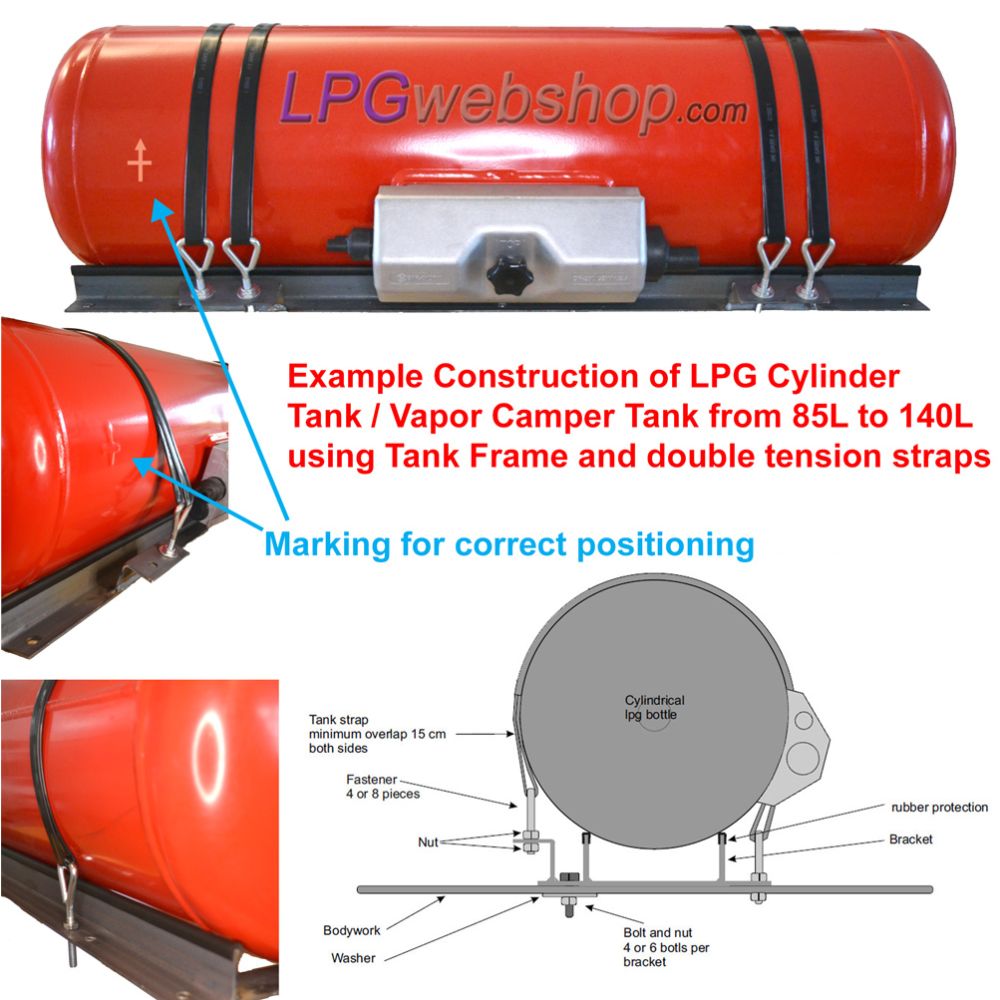
Cyl. Camper LPG Vapor Tank 120L (Ø360x1298) GZWM 4 Hole - Incl. Valves - Camper Cooking
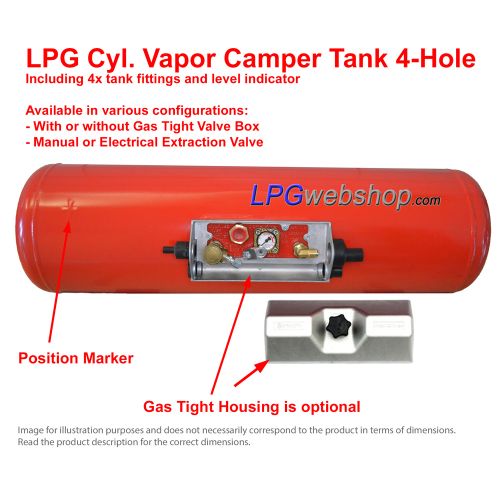
Type: GZWM ZC360/120P - 4-hole vapor gas cylinder gas tank (4 x separate appendages)
Approval: E20 67R-01 0612 (High-Quality Automotive ECE 67R-01 Approval.)
Tank capacity: Gross 120 Liter (80%=96 Liter)
Dimensions: Ø360 mm x Length: 1298 mm
Gross Empty Weight: 43 kg
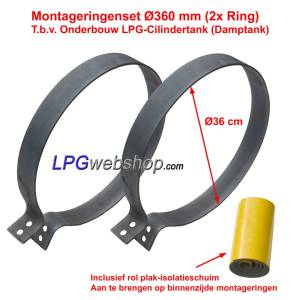
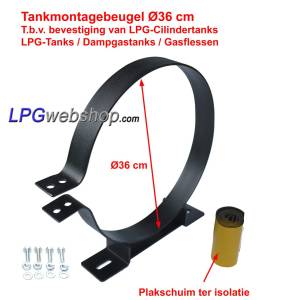
Mounting: Using mounting rings / mounting brackets (Consult the regulations )
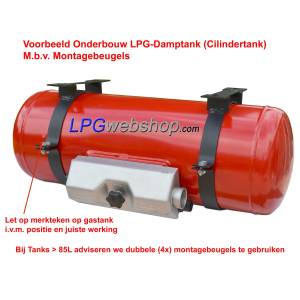
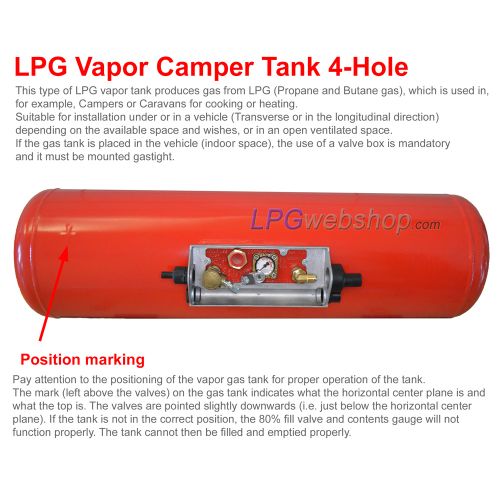
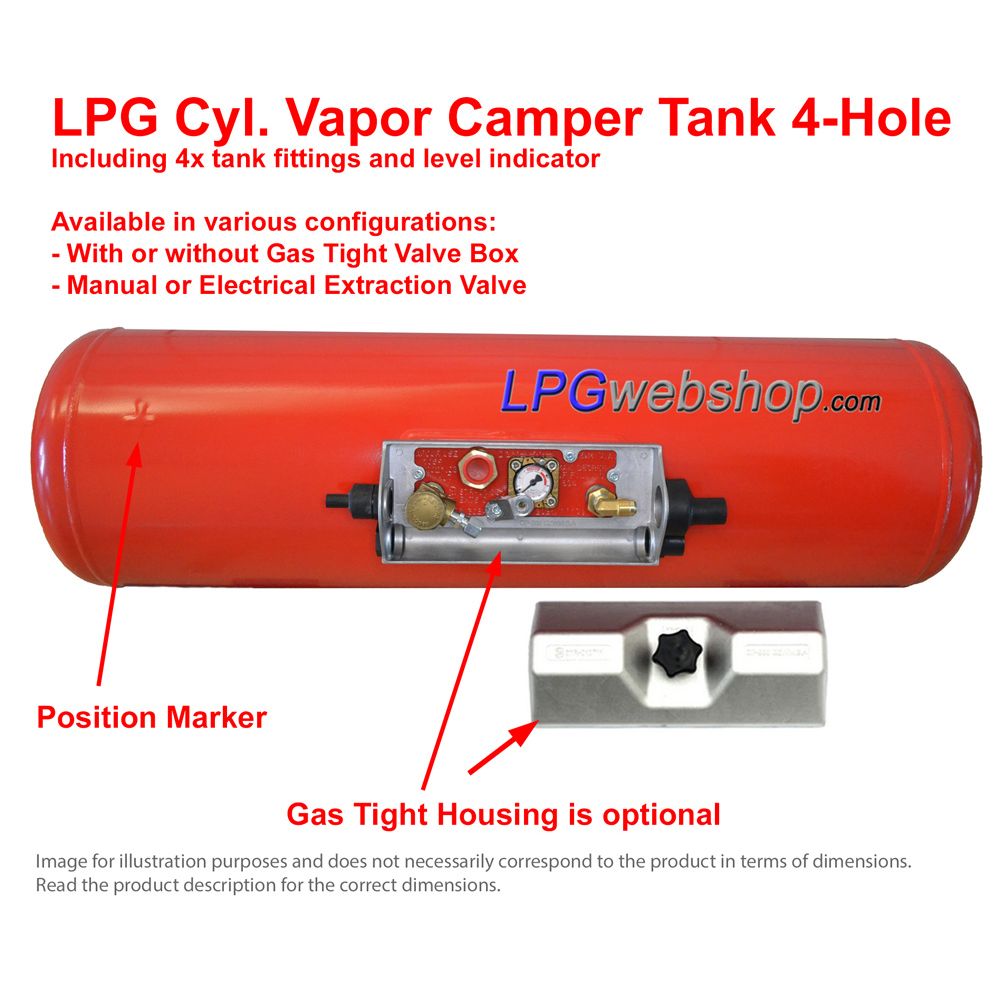
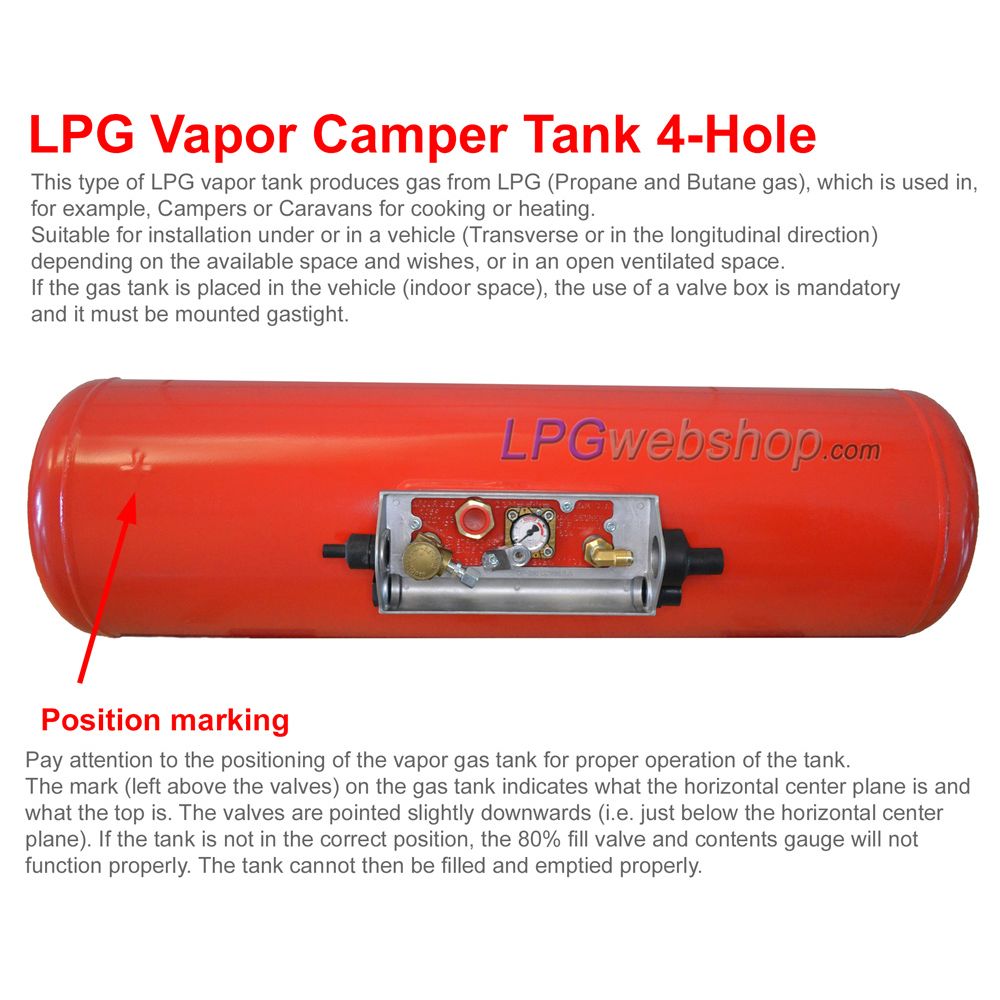
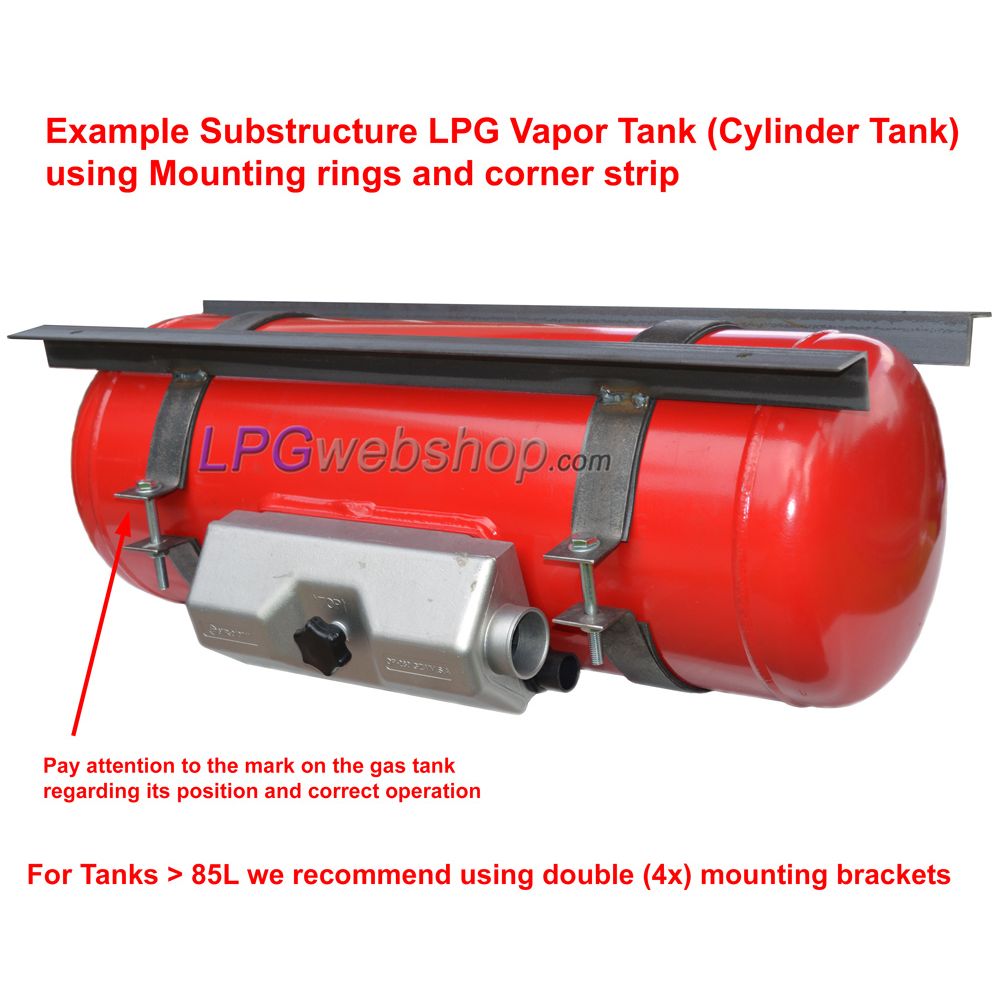
Tank position: Horizontal, appendages slanted downwards. See mark (cross with arrow) on gas tank to indicate top and horizontal center.
NB! Choose the tank in the correct configuration (Images for illustrative purposes and examples of configurations.)
Type: GZWM ZC360/120P - 4-hole vapor gas cylinder gas tank (4 x separate appendages)
Approval: E20 67R-01 0612 (High-Quality Automotive ECE 67R-01 Approval.)
Tank capacity: Gross 120 Liter (80%=96 Liter)
Dimensions: Ø360 mm x Length: 1298 mm
Gross Empty Weight: 43 kg
Mounting: Using mounting rings / mounting brackets (Consult the regulations )
Tank position: Horizontal, appendages slanted downwards. See mark (cross with arrow) on gas tank to indicate top and horizontal center.
NB! Choose the tank in the correct configuration (Images for illustrative purposes and examples of configurations.)
Foreign companies with a valid VAT number shop VAT-free here! READ HOW.
 Shipping& Delivery
Discount on Shipping from €150,- and extra discount from €250,-
 Safe & Trusted
Webshop Trustmark Certified Member & Secured by SSL.
 TÜV ISO 9001
Certified by TÜV Nord Netherlands
 Refund policy
14-Day Reflection Period & Return Policy
High Quality Automotive ECE 67R-01 Approval. Any re-inspection after 10 years depends on national regulations. In many countries a visual inspection is sufficient. (Please find out about your national regulations).
Before ordering first check very carefully which type of LPG tank and which dimensions you need and what fits in your application. Exchanging an LPG tank is sometimes difficult, since the transport of heavy tanks is per pallet and is expensive. (Pick up may also be possible.)
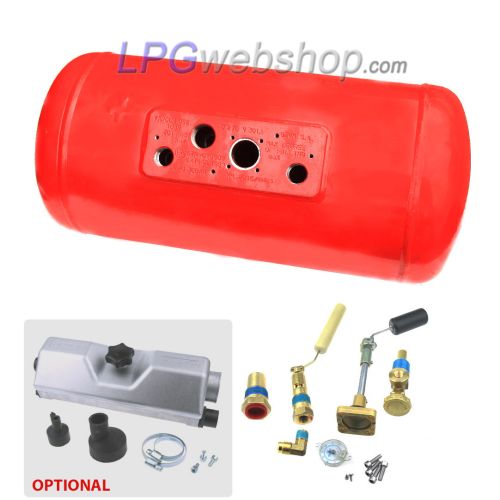
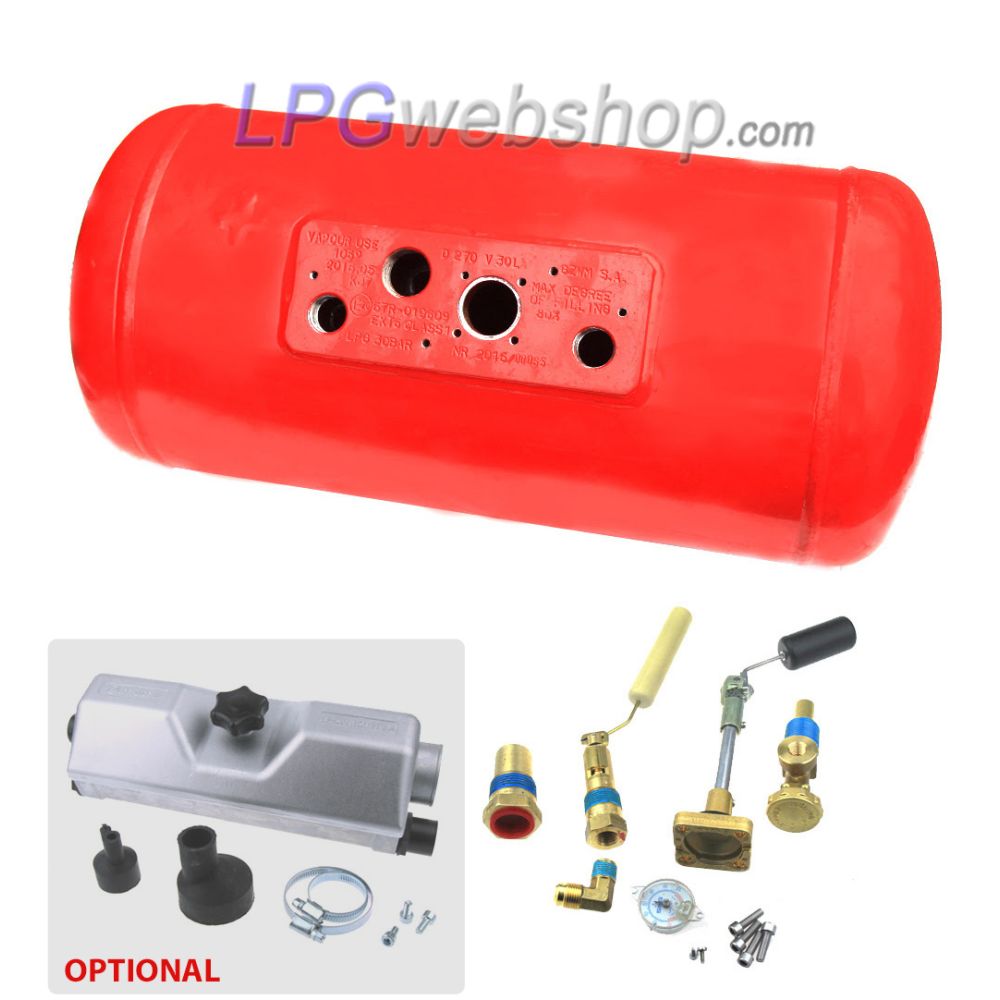
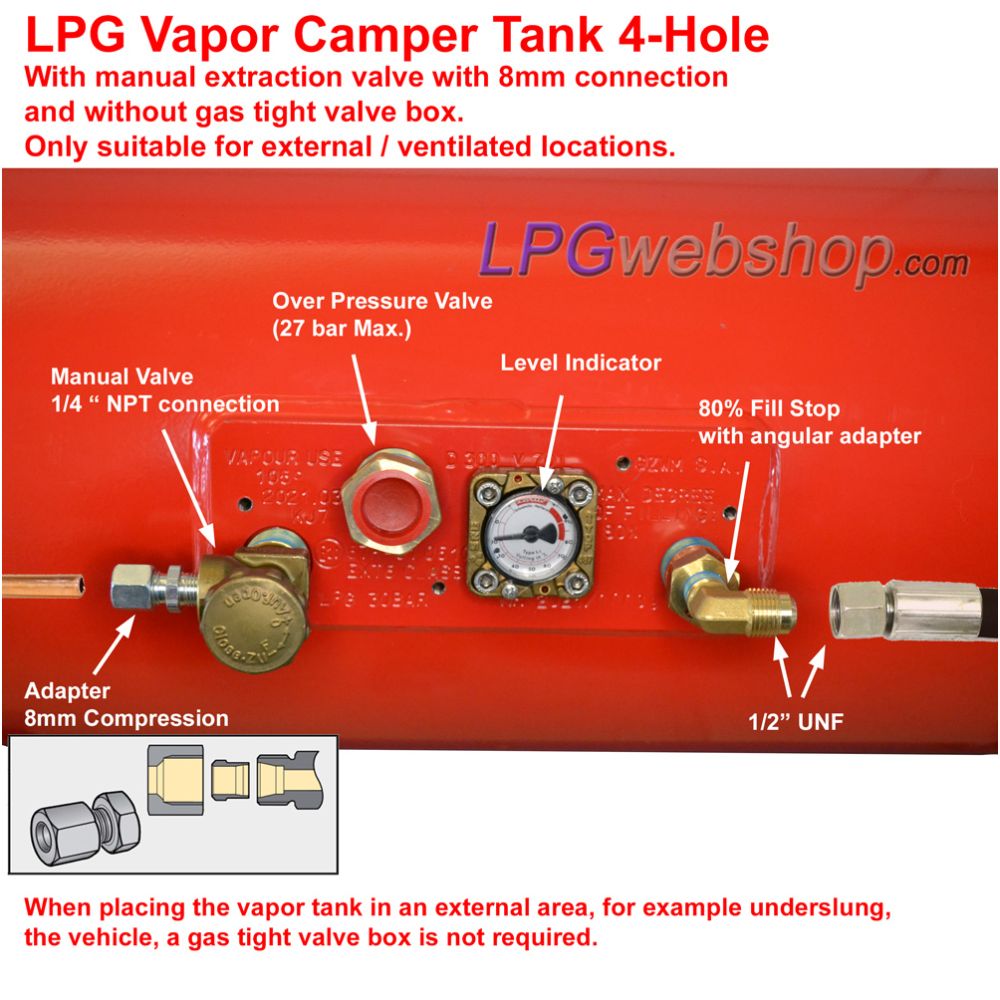
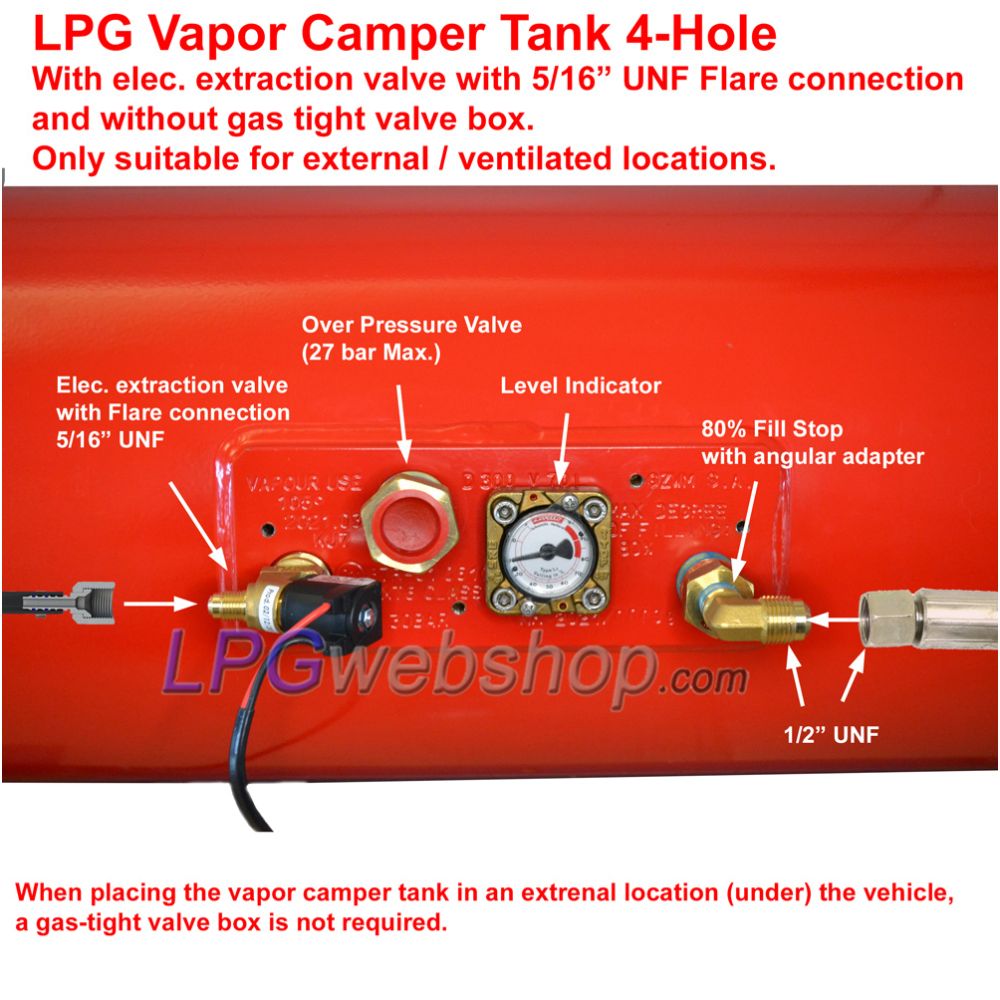
Our LPG tanks are equipped with 4 tank valves / accessories, namely;
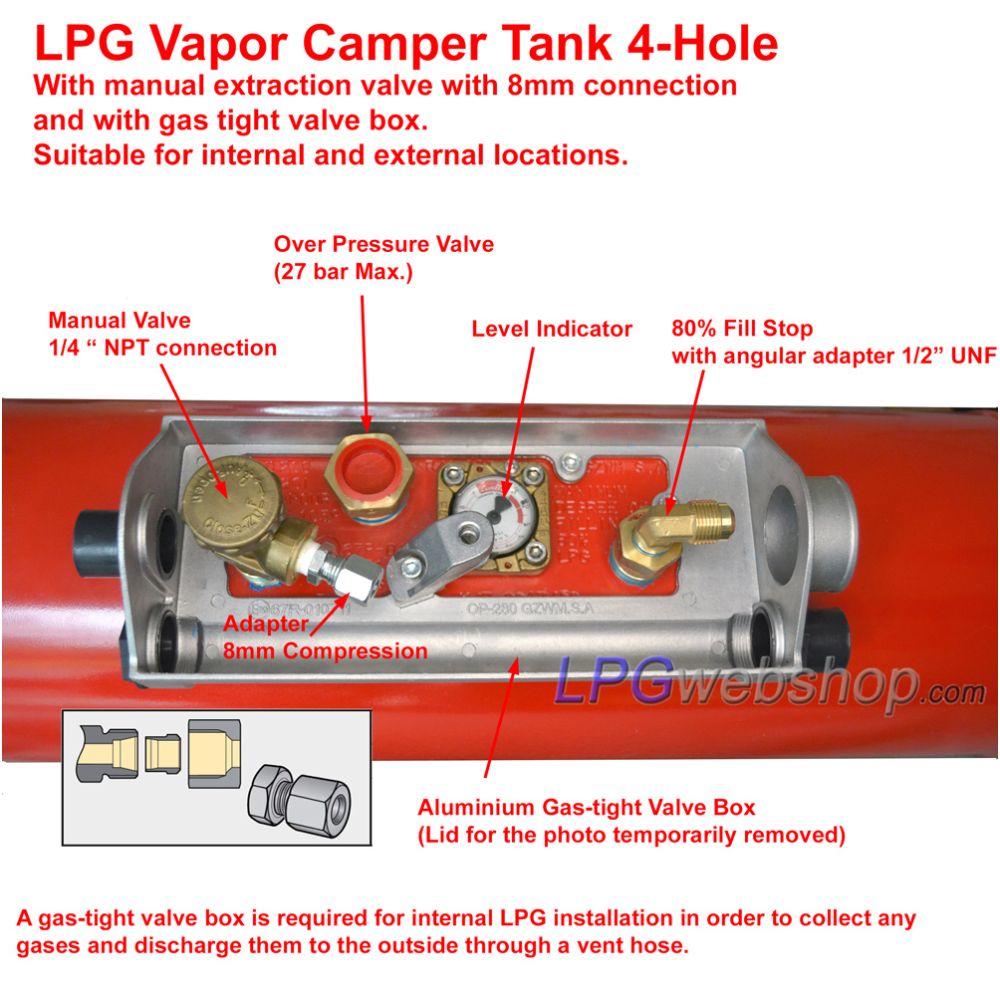
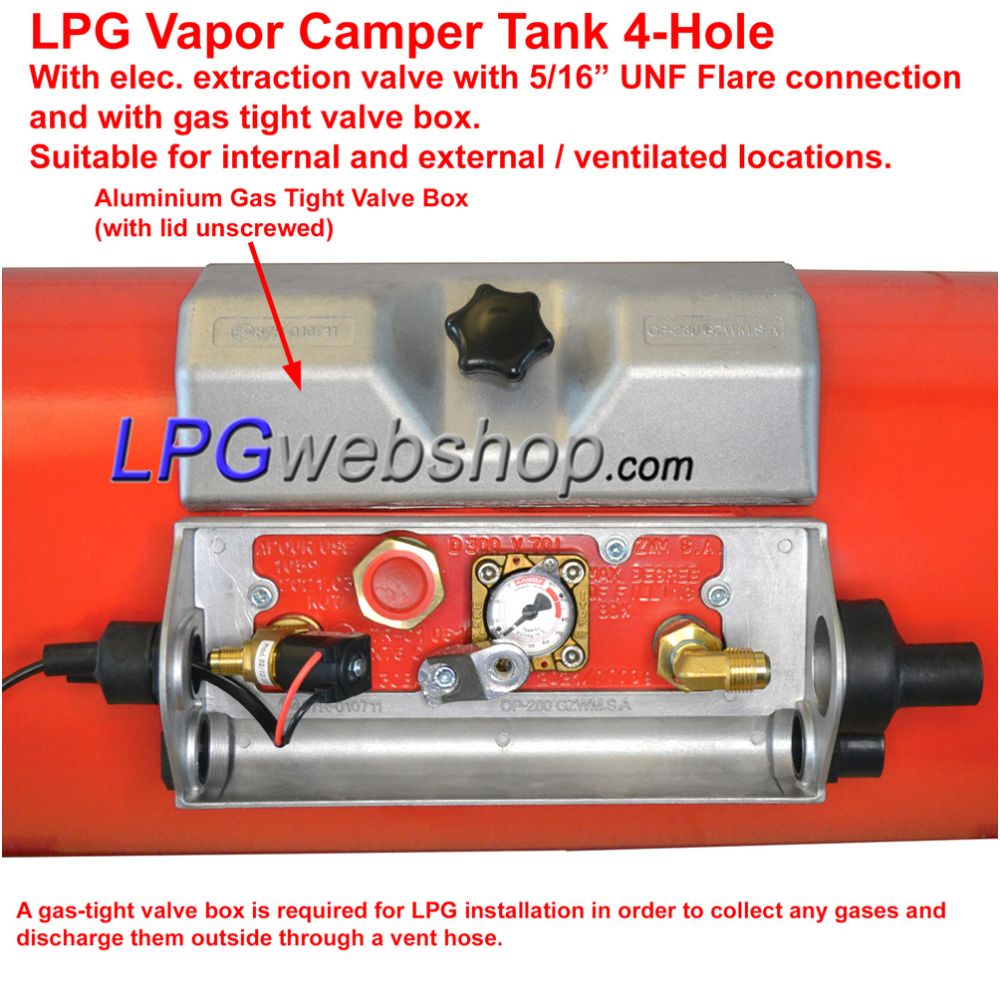
An optional aluminum gas-tight housing (can be ordered at an additional cost) can be mounted on the LPG tank and encloses these appendages and can capture any relief gases.
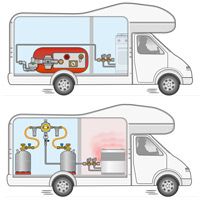
An LPG vapor tank makes it possible to use LPG gas in your RV camper (also called Motorhome), caravan, or foodtruck, for example for cooking, heating, or other purposes. There are many different LPG tanks with different dimensions. This is not without reason, as there is an even greater variety of vehicles with different shapes and sizes. Therefore, it is important that the LPG tank and the vehicle are a match and that the LPG tank has the correct dimensions to be installed properly in or under the vehicle. Given this great variation on the one hand of LPG tanks and on the other hand of vehicles, it is impossible to give specific instructions for each combined variant. (As an alternative, you may consider using refillable LPG gas bottles.)
Important choice: The specific choice of product type and size is the responsibility of the customer/installer, as they are best able to determine what fits best in the vehicle (knowing the vehicle and layout) and what does or does not meet the specific wishes and user goals (heating, cooking, BBQ, etc.). We advise creating an overall plan tailored to the end user's needs, applicable safety requirements, and technical possibilities. For this, we recommend also reading the following article carefully: LPG installation in a recreational vehicle like a RV Camper, Caravan or Food Truck
This important component is responsible for storing the liquid LPG and also vaporizing it, so that the gas leaves the LPG tank in gaseous form. LPG vapor tanks come in various shapes, sizes, and variants. For example, LPG vapor tanks exist in cylindrical form or in the shape of a ring or wheel (toroidal). Both types are placed horizontally in or under the vehicle. Most LPG vapor tanks are so-called red 4-hole gas tanks, meaning they are equipped with 4 holes/valves each with its own function such as filling with an 80% fill valve with non-return valve, an overpressure valve, a content gauge (float), and an extraction valve with flow limiter that can be opened and closed (manually/electrically). The red color distinguishes them from LPG tanks intended for powering a vehicle on LPG, which are black and deliver LPG in liquid form to the LPG system.
LPG vapor tanks must have UNECE 67R approval, which makes it possible to use them in a recreational vehicle and to refuel. This is a strict and very safe ECE directive for LPG components for Automotive applications. LPG vapor tanks are always equipped with a separate inlet and outlet.
This is a question we often see being asked. Many people assume that the LPG tanks are essentially identical, but that is a mistaken assumption. The manufacturer does not give the tanks a clearly different color for no reason.
A black LPG tank is intended for vehicles that run on LPG and for this reason delivers the LPG in liquid form to the LPG system, which is then vaporized using a vaporizer (and the engine's hot water). The outlet of a black LPG tank is internally connected to the bottom of the tank, so that liquid LPG is extracted. And in a black cylindrical LPG tank, the tank valves are at a 52° angle, while in a red cylindrical LPG vapor tank these are turned more downwards at a 105° angle. Internally, a red LPG vapor tank is different, because here the outlet is connected to the highest internal point of the tank where the LPG is present as a gas. This causes the gas to leave the vapor tank in gaseous form (instead of liquid form). And because of this, a vaporizer (supplied with hot water) is no longer needed to vaporize the LPG. Instead, a pressure regulator is needed to reduce the pressure to a low, safe working pressure for the rest of the system.
But then can't I put a black LPG tank in a different position, so that vapor gas (gaseous form) comes out of the tank? Unfortunately, that will not work, because then the 80% fill valve will be at the wrong angle, causing it to shut off quickly and the LPG tank cannot be filled properly. Furthermore, the LPG system then becomes very unsafe, because the overpressure valve is also in the wrong position, causing it to release liquid LPG instead of vapor gas. And the chance that partly liquid LPG comes out of the tank while driving or when parked on a slope is high. This can lead to large flash fires at the gas appliances. This can therefore create very dangerous situations! In case of accidents, insurance will not pay out in such a case and the damage costs will be at your own expense.
Conclusion: A black LPG tank cannot be used as an LPG vapor tank in an RV camper or caravan, just as the reverse is also not possible!
The most important part of the vapor gas system is the LPG tank or LPG gas bottle (or multiple) for storing the LPG. The choice between an LPG gas bottle or LPG tank depends on the required storage capacity and the available space in or under the RV camper (also called Motorhome), caravan, or foodtruck.
An LPG tank and LPG gas bottle is indeed filled and stored with liquid LPG, but a small amount also evaporates and collects in the upper space of the LPG tank or LPG gas bottle. The gas is extracted from the upper space, causing the gas to leave the LPG tank in gaseous form and the pressure in the LPG tank to drop. Due to the pressure drop, liquid LPG evaporates again, causing the pressure to rise again. The evaporation of LPG requires heat (energy). When LPG evaporates, the gas tank cools down slightly. The more heat available, the easier the LPG evaporates and the pressure increases. With high gas consumption, a lot of LPG will also evaporate, causing the LPG tank to cool down significantly. The evaporation process will therefore become increasingly difficult.
The evaporation process requires heat extraction from the environment. Propane evaporates better at low temperatures than butane. As a result:
An optional aluminum gas-tight housing can be mounted on the LPG tank and encloses these valves and can capture any relief gases.
(Can optionally be ordered at an additional cost.) A gas-tight housing (tank valve housing) is used to protect the tank valves / accessories and, in case of internal installation, to capture any gases released from the overpressure valve on the LPG tank and then be able to vent them via a vent hose and floor vent (floor pass-through) to the outside. A gas-tight housing is certainly required if the LPG tank is placed inside the interior of a vehicle and must be sealed gas-tight using the supplied rubbers. A gas-tight housing is not strictly necessary if the LPG tank is placed in an external space (e.g., with underfloor mounting) or in a ventilated space (which is sealed off from the rest of the vehicle). It is always necessary to protect the tank valves / accessories from dirt and water.
In the case that a gas tank is placed inside the interior of the vehicle (internal installation), it is necessary to equip the gas tank with a gas-tight housing, a vent hose, and a floor vent (floor pass-through) for venting any gases to the outside.
A gas-tight housing in combination with a manual valve is not always possible to seal properly...
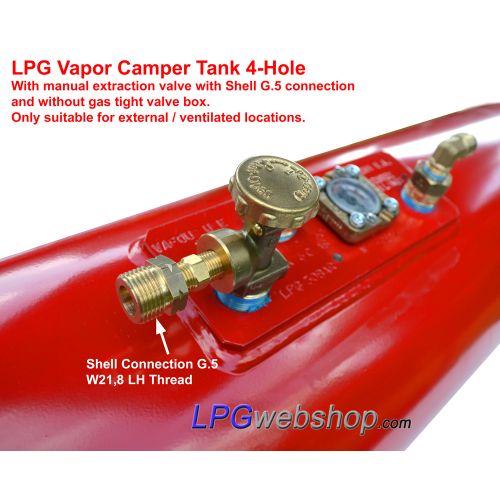
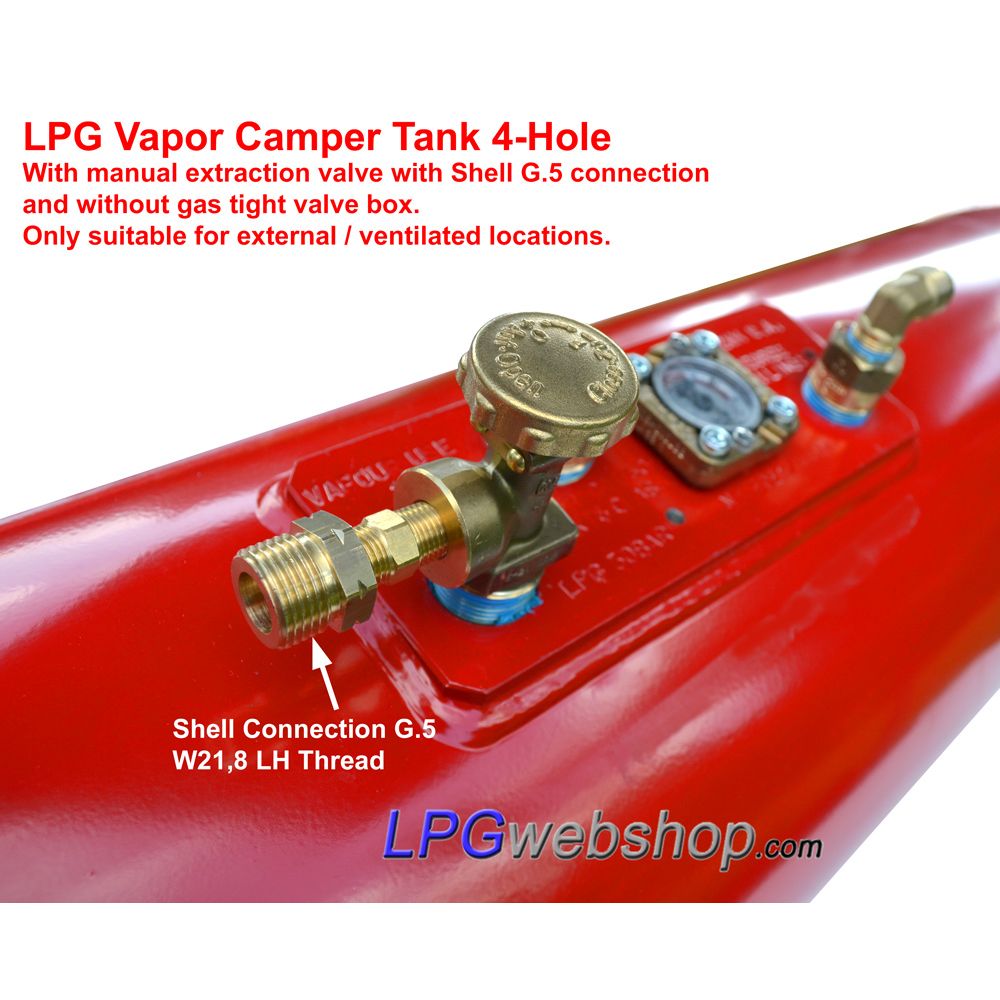
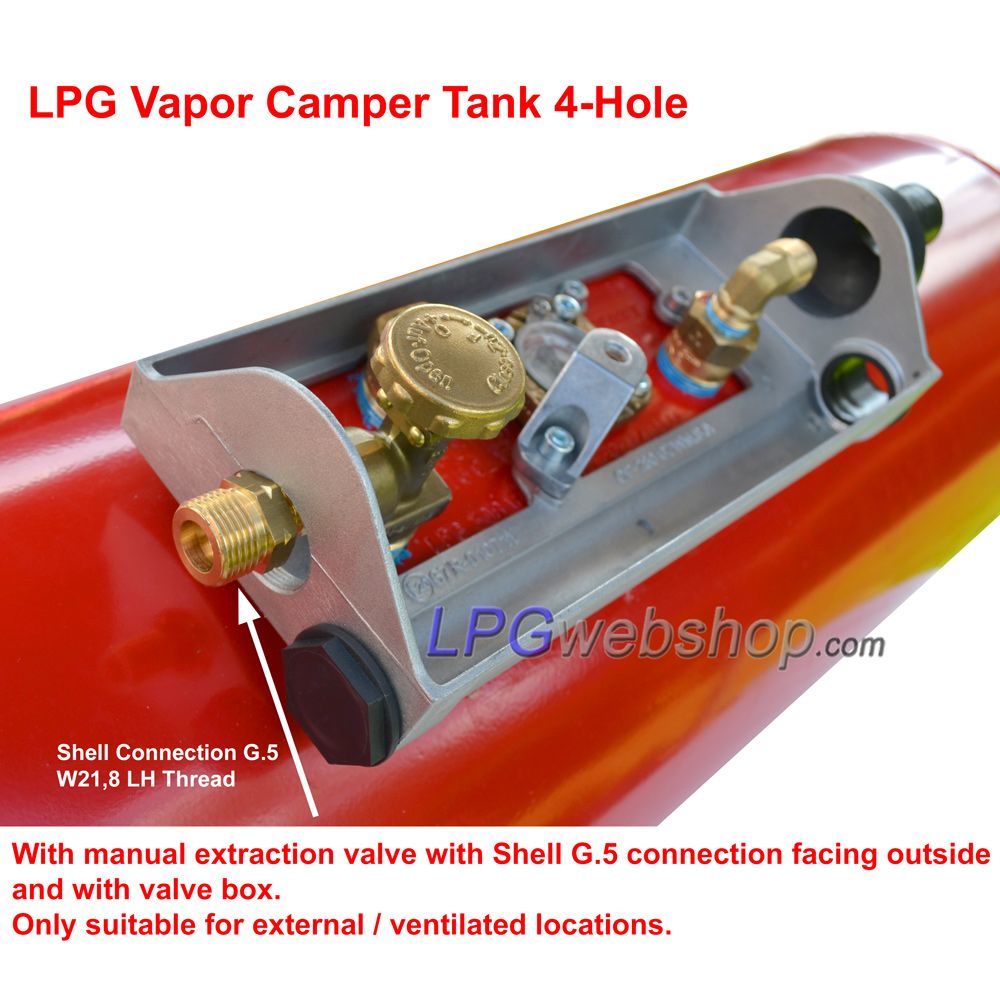
When using a Manual valve SHELL connection Male G.5 Kombi (G.2/G.4/G.8) (W21.8x1/14 Left-Hand Thread), it is NOT possible to properly seal the gas-tight housing, meaning this combination is only really suitable for underfloor mounting or, in the case of internal installation (interior), only in a ventilated space that is sealed off from the rest of the vehicle.
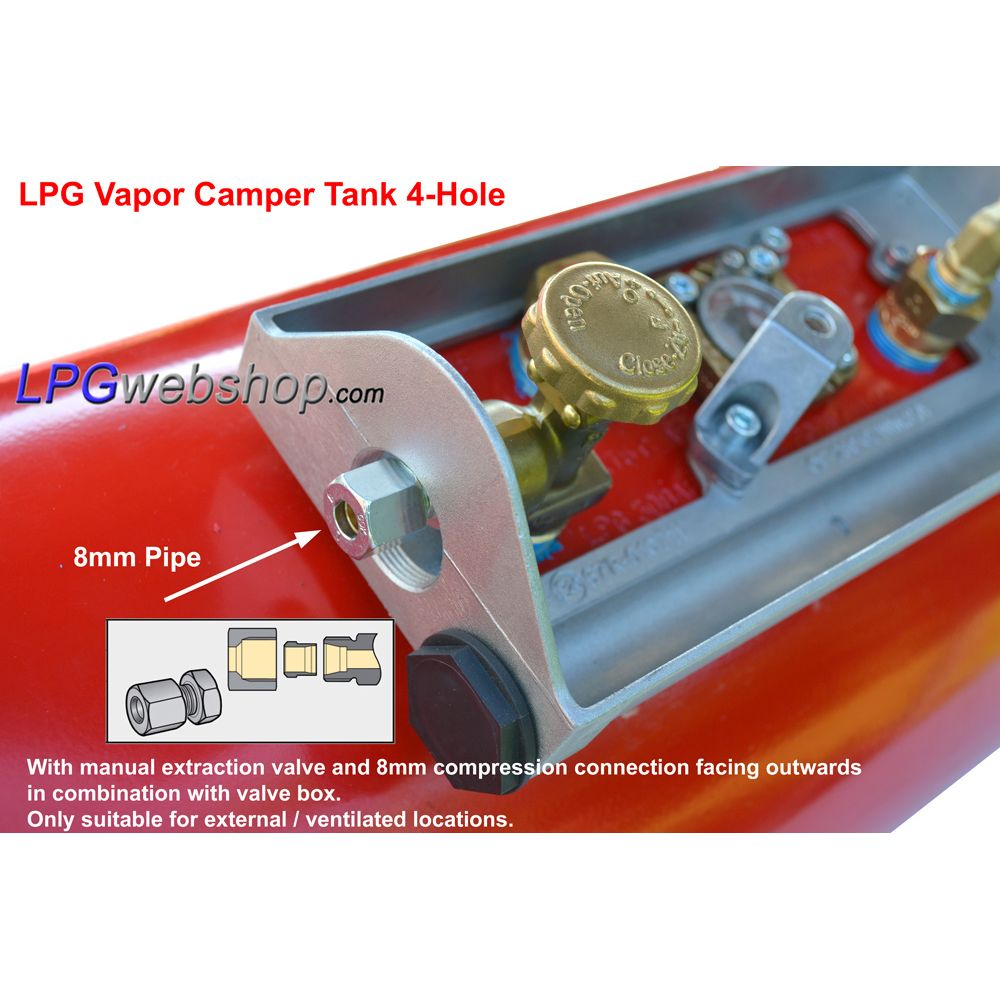
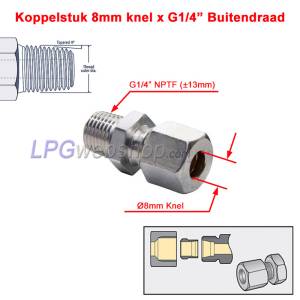
When using a manual valve with an 8mm compression connection that is directed straight outwards, the gas-tight housing also CANNOT be properly sealed, because there is not enough space to place a gas-tight plastic sealing boot.
In the case of a manual valve with an 8mm compression connection, the gas-tight housing can be sealed gas-tight if the manual valve is installed with its outlet pointing inwards. (The gas line can then be looped inside the housing or exit the housing on the same side as the fill hose).
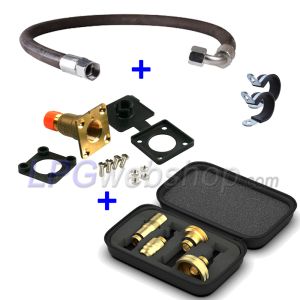
MANUAL EXTRACTION VALVE 8mm: A vapor gas tank is fitted with a manual valve as a standard. This means that the outlet of the gas tank must be opened and closed manually. This can sometimes be difficult if the tank is placed far below the vehicle and is difficult to access. A manual Valve is standard equipped with an 8mm compression coupling, so that an 8mm LPG pipe (copper / plastic) can be connected to the pressure regulator.
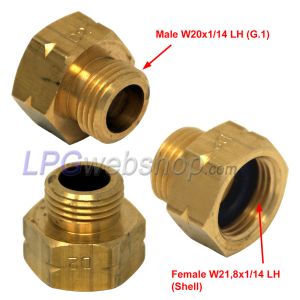
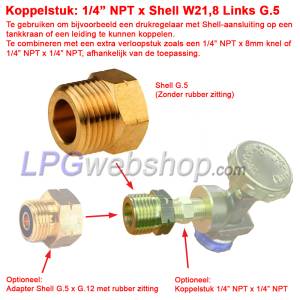
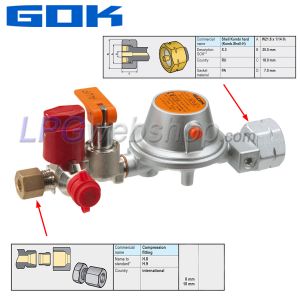
MANUAL EXTRACTION VALVE with SHELL, Its possible to use a SHELL Male G.5 Kombi (G.2/G.4/G.8) with a W21.8x1/14 left-hand thread on the hand tap. This option is used to connect a pressure regulator directly to the vapor tank. (An additional adapter to a G.12 connection may be required for a good gas-tight connection.)
NB! With a hand tap with a Shell connection, the tank cabinet cannot be connected in a gas-tight manner and this method is therefore only suitable for an outdoor area and not suitable for built-in (indoor space).
ELECTRICAL EXTRACTION VALVE you can also opt for an electric extraction Valve that is powered with 12V (11W) (Normally Closed) via an electrical circuit with an LPG switch and fuse (not included). This makes it possible to open and close the tank valve from the vehicle interior. It must be taken into account that if you stand still for a long time with the elec. extraction valve energized (1A), this could drain the battery.
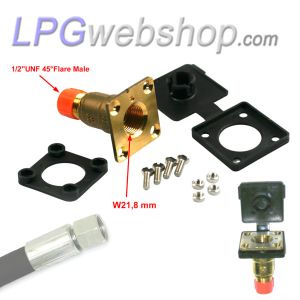
An 8mm LPG (copper) pipe also fits on this type of extraction valve, by means of a Flare connection. Type: 5/16" UNF


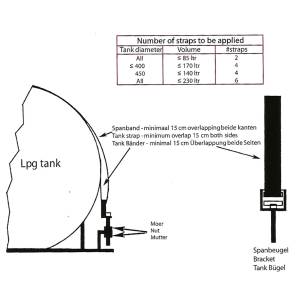
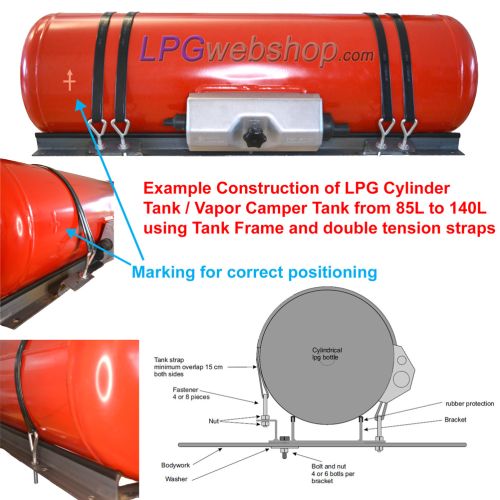
An LPG tank in a (recreational) vehicle such as an RV Camper and Foodtruck must of course be firmly mounted, so that it cannot come loose and move during driving or in the event of a collision. Therefore, make sure it is attached to the vehicle with a sturdy construction. For LPG tanks, the installation requirements as in EN 12979 (or applicable national guidelines such as the RDW LPG installation guidelines in NL) apply. The precise method of mounting depends on the size of the LPG tank and the positioning (underfloor mounting or internal installation, etc.).
We mention a few basic requirements here:
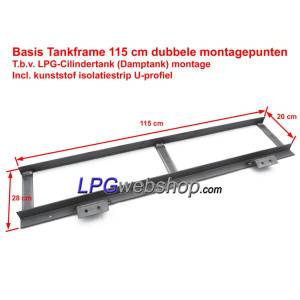
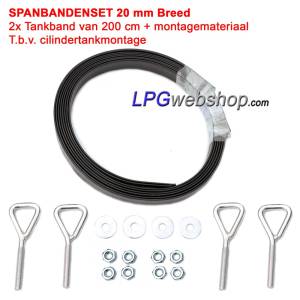
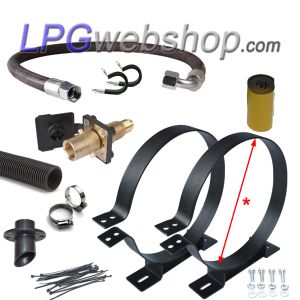
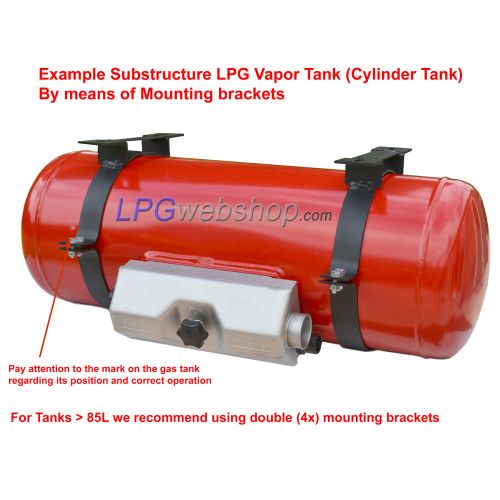
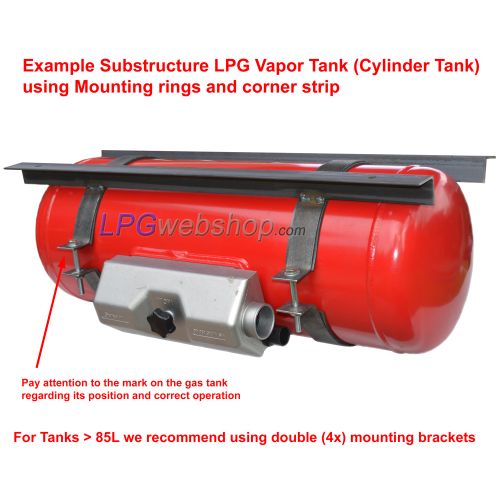
For mounting LPG tanks, we essentially have 3 mounting systems available in our webshop. 1; using a tank frame and ratchet straps that secure the tank to the frame, 2; using mounting rings that clamp around the tank and can be welded to iron angle iron, to attach the assembly to the vehicle, and 3; using mounting brackets that also clamp around a tank and can be attached to the vehicle via a foot on the bracket. These mounting systems are available in different sizes, so they are available for most tank sizes.
Read more about this in our tutorial Installation instructions for LPG cylinder tanks (vapor tanks) in (recreational) vehicles
Pay attention to the mark on the tank indicating the horizontal mid-plane and the top. The tank valve / accessories should be slightly pointed downwards.

The pressure in a gas tank varies, depending on temperature, between 1 and 20 bar. This pressure is MUCH too high for the gas appliance(s), such as a cooker or heater in your RV camper. Therefore, it is necessary to reduce the pressure to a constant, safe and low pressure. The prescribed working pressure for gas appliances is 30 mbar (older LPG systems or in other applications such as foodtrucks or static caravans sometimes use a working pressure of 50 mbar and sometimes 39 mbar).
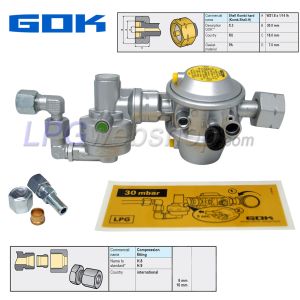
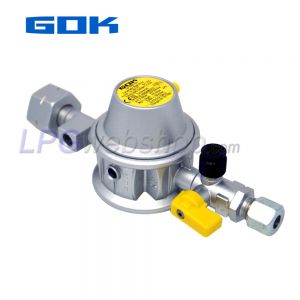
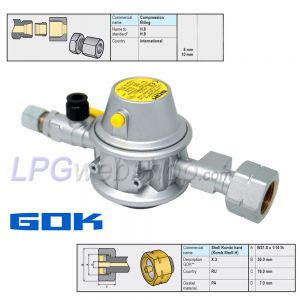
This pressure reduction and regulation is done by a pressure regulator, which you connect to the outlet of the gas tank, directly or via a high-pressure connecting line.
Read more about pressure regulators and pressure reduction in this article: Pressure Regulators for Gas Bottles and Vapor Tanks





Data sheet
No customer reviews for the moment.