











LPG Camper Tanks for Campers, Caravans and Food Trucks
This article provides a comprehensive guide on the use, installation, and safety aspects of LPG Camper Tanks in recreational vehicles, in accordance with European standard EN 1949 and the Dutch NPR-2577 guideline.
Introduction: LPG/Gas in Your Vehicle
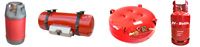
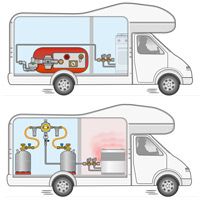
For LPG applications in your camper, caravan, or food truck - for example for cooking, heating, or other purposes - an LPG Camper Tank offers a professional solution. As an alternative, you might consider using refillable gas bottles.
Important Choice: The specific selection of type and size of the product is the responsibility of the customer/installer, as they can best determine what fits in the vehicle and meets the specific requirements and usage purposes (heating, cooking, BBQ, etc.). We recommend creating a comprehensive plan tailored to your needs, safety requirements, and technical possibilities.
Operation of LPG Gas Storage in Camper Tanks
Basic Principle
LPG is stored in liquid form in the LPG Camper Tank. A small portion continuously evaporates and collects in the upper space of the tank. The gas is withdrawn from this vapor phase, leaving the tank in gaseous form.
Evaporation Process and Temperature Dependence
The evaporation process requires heat extraction from the environment. Propane evaporates better at low temperatures than butane. Therefore:
- Pressure in the tank is highly temperature dependent
- Pressure may drop during high consumption in cold conditions
- Consider an additional gas bottle for more evaporation capacity with high demand
Tank Outlet Connection Types
Standard Connection Types:
- 1/2" UNF conical connection (standard)
- 8mm compression fitting for copper/plastic piping
- Shell connection type G.5 (W21.8 x 1/14 left-hand thread)
Connection Specifications
1/2" UNF Conical: Standard industrial connection for high-pressure gas applications
8mm Compression: Ideal for direct copper or plastic pipe connections
Shell G.5: W21.8 x 1/14 left-hand thread - Common European standard for LPG connections
Type Approvals and Inspection Requirements
LPG Camper Tanks are equipped with 67R-01 EU approval, a strict standard for automotive LPG applications. These tanks are not subject to a 10-year recertification but do require annual visual inspection for:
- Rust formation
- Damage
- Deformations
IMPORTANT: Preserve the Tank Certificate!
Each new gas tank comes with a unique tank certificate. Store this document carefully as it may be required for vehicle inspection and is difficult to obtain again.
Mounting of LPG Camper Tanks According to NPR-2577
Safety Requirements
The mounting must resist forces during normal use and in collisions. The NPR-2577 guideline specifies:
Available Mounting Systems
- Tank Frame with Tension Straps - For universal application
- Mounting Rings - For welding to angle iron constructions
- Mounting Brackets - With foot mounting to the vehicle
Positioning and Orientation
Note the marking on the tank indicating the horizontal center plane and the top. The appendages should be slightly downward facing.
Essential Safety Guidelines for Installation
- Have installation performed by a certified LPG specialist
- Place tanks only in outdoor air or ventilated compartments
- Minimum ground clearance of 20 cm for underbody mounting
- Minimum 10 cm distance from heat sources
- Piping should not be the lowest part of the vehicle
- Have the complete installation inspected by competent authority
Filling Systems and Connections
External Fill Connections
Various types available:
- Recessed fill connections with fill pot
- Flat fillers with bayonet nipple
- Mini fillers for compact spaces
Electrical Safety Systems
Electric Tank Valves
Provide easy operation from the cabin but consume approximately 11W (1A) at 12V.
Safety Circuits
- Relay circuit that closes when ignition is switched off
- Impact switch (Fuel Cut Off Switch) for collisions
Installation Requirements: Protect the installation with a 5A fuse and connect directly to the battery.
Disclaimer
The information in this article is intended as a guideline only and is based on the EN 1949 standard and NPR-2577 guideline. This information may differ from specific national regulations in different countries. Users are responsible for checking and complying with applicable local laws and regulations. Always consult a certified professional for tailored advice.
Despite the care with which this information has been compiled, no rights can be derived from it. The most recent official standards and regulations are always leading.
All images are copyright protected.
Comments
No comment at this time!
Leave your comment